My Coffee Experiments: Japanese Iced Pour-Over and Coconut Water
My specialty coffee journal, with Japanese iced pour-over recipes, coconut water experiments, and a Kenya Chinga AA from Singapore.
Jasmine, mandarin, blackcurrant, a fresh fruity finish. These are the kinds of notes that get me interested in a bag of coffee.
I’ve always loved the smell of coffee. Specialty coffee takes that further, with hints of fruit and flowers I never expected to find in a cup.
I tend to reach for light or light-medium roasted Arabica. I like a fruity, floral cup more than a bitter, roasty one.
This is a record of my current setup and recipes. There’s still plenty to experiment with.
My setup at home
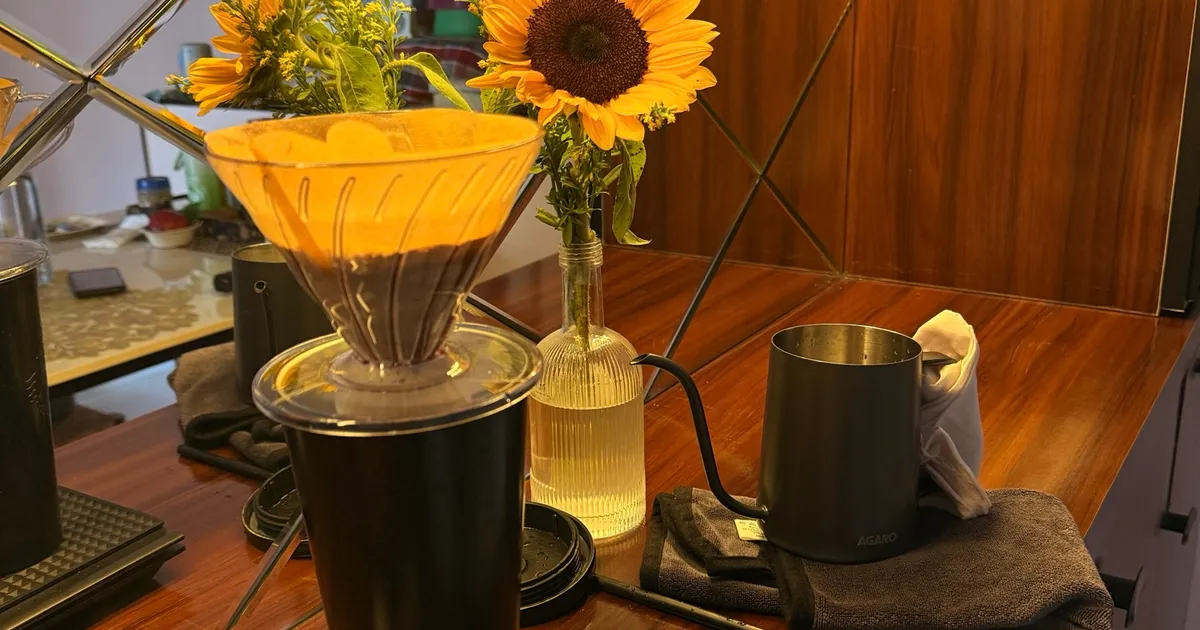
I use a pour-over dripper, an AeroPress, an electric kettle, and a digital scale. I usually buy coffee already ground for pour-over or AeroPress.
For Japanese iced pour-over, I brew straight into my roughly 500 ml double-wall insulated tumbler. The ice goes inside first, with the dripper on top. I don’t normally use a separate server.
I enjoy both pour-over and AeroPress, but Japanese iced pour-over is my preference when exploring fruity and floral coffees. Hot water brews the coffee, which drips directly onto ice.
What the setup costs
Here’s roughly what this gear costs in India right now. Prices move around a lot, so treat these as ballpark figures. USD amounts use about ₹95 to the dollar.
| Item | INR | USD |
|---|---|---|
| Hario V60 02 plastic dripper | ₹600 | $6 |
| AGARO Elite gooseneck kettle | ₹1,400 | $15 |
| KitchenTour coffee scale with timer | ₹2,000 | $21 |
| AeroPress Original | ₹3,600 | $38 |
That’s about ₹4,000 ($42) for the pour-over setup alone, or about ₹7,600 ($80) with the AeroPress. I already had the tumbler.
For beans, a 250 g bag of light-roast specialty coffee from an Indian roaster like Blue Tokai costs around ₹650 to ₹700 ($7).
Café vs. home
A Blue Tokai iced pour-over costs ₹260 ($2.70). Specialty cafés in India usually charge somewhere between ₹200 and ₹350 ($2 to $3.70) for a pour-over.
At home, a 250 g bag makes about 12 cups at 20 g each. That works out to roughly ₹55 (about $0.60) of coffee per cup, plus a few rupees for the paper filter.
So each cup at home saves me around ₹200 ($2). The pour-over gear pays for itself in about 20 cups.
My classic Japanese iced recipe
- 20 g ground coffee
- 200 g hot water at 93 to 95°C
- 120 g ice
The ice counts toward the water total. That’s 320 g water for 20 g coffee, or a 1:16 ratio. It describes the ingredients going in, rather than the final drink weight, since the grounds retain some water.
- Put 120 g ice in the tumbler.
- Rinse the paper filter separately and discard that water. Set the dripper over the tumbler and add 20 g coffee.
- Tare the scale. Start the timer and pour 50 g hot water for the bloom. Wait until 0:40.
- Pour gradually until the scale reads 200 g total hot water.
- Aim to finish around 2:30 to 3:15.
- Remove the dripper and stir or swirl thoroughly to chill the coffee.
Those scale readings are cumulative. The bloom is part of the 200 g hot water.
Trying coconut water
For regular, chocolatey, or nutty beans, I’ve been experimenting with chilled coconut water.
I used to drink my iced coffee with tonic water, but I’ve moved on from that. These days it’s coconut water or just plain water. I’ve never really liked milk-based coffee unless my mom made it.
The 20 g version uses 200 g hot water at 92 to 94°C, 60 g chilled coconut water, and 60 g ice. Put the coconut water and ice in the tumbler, bloom the coffee with 50 g hot water for 40 seconds, then gradually add the remaining 150 g. Aim for 2:30 to 3:00 and stir.
The coconut water replaces part of the dilution water. I don’t heat it or pour it through the coffee grounds. Since it contains dissolved solids, I treat this as a recipe by ingredient weight rather than an exact plain-water brewing ratio.
My everyday variation uses a little less coffee:
- 18 g ground coffee
- 180 g hot water at 92 to 94°C
- 55 g chilled coconut water
- 55 g brewing ice
- 80 to 100 g additional serving ice
Put the coconut water and brewing ice in the tumbler. Bloom with 45 g hot water for 40 seconds, then gradually add the remaining 135 g. Aim to finish around 2:30 to 3:00, remove the dripper, and add the serving ice.
Brewing ice cools and dilutes the coffee as it drips. Serving ice goes in afterward and adds further dilution as it melts. It needs to be counted too when comparing recipes.
This version uses 18 g coffee instead of 20 g. That doesn’t make it a guaranteed low-caffeine drink. Caffeine depends on the beans and extraction.
A bag from Singapore
During my Singapore trip, I visited Apartment Coffee and bought Kenya Chinga AA.
The bag lists Nyeri County, Kenya, at 1,795 meters above sea level, with Othaya FCS as the cooperative. The varieties are SL28, SL34, Ruiru 11, and Batian. It’s a washed coffee from the 2026 harvest, filter roasted on September 28, 2026.
The listed tasting notes are blackcurrant, mandarin, and oolong tea. Those fit closely with the fruity, citrus, and floral flavors I enjoy. They’re the roaster’s notes, rather than my own tasting verdict.
For this bag, I’m using the classic recipe above: 20 g coffee, 200 g hot water at 93 to 95°C, and 120 g ice. I’m leaving out coconut water to explore the coffee on its own.
I’ll write more coffee logs as I keep exploring, trying new beans, and experimenting with recipes. If you’re brewing Japanese iced coffee too, I’d love to hear which beans and ratios you’re enjoying. Find me on LinkedIn.